No Need for Dawn
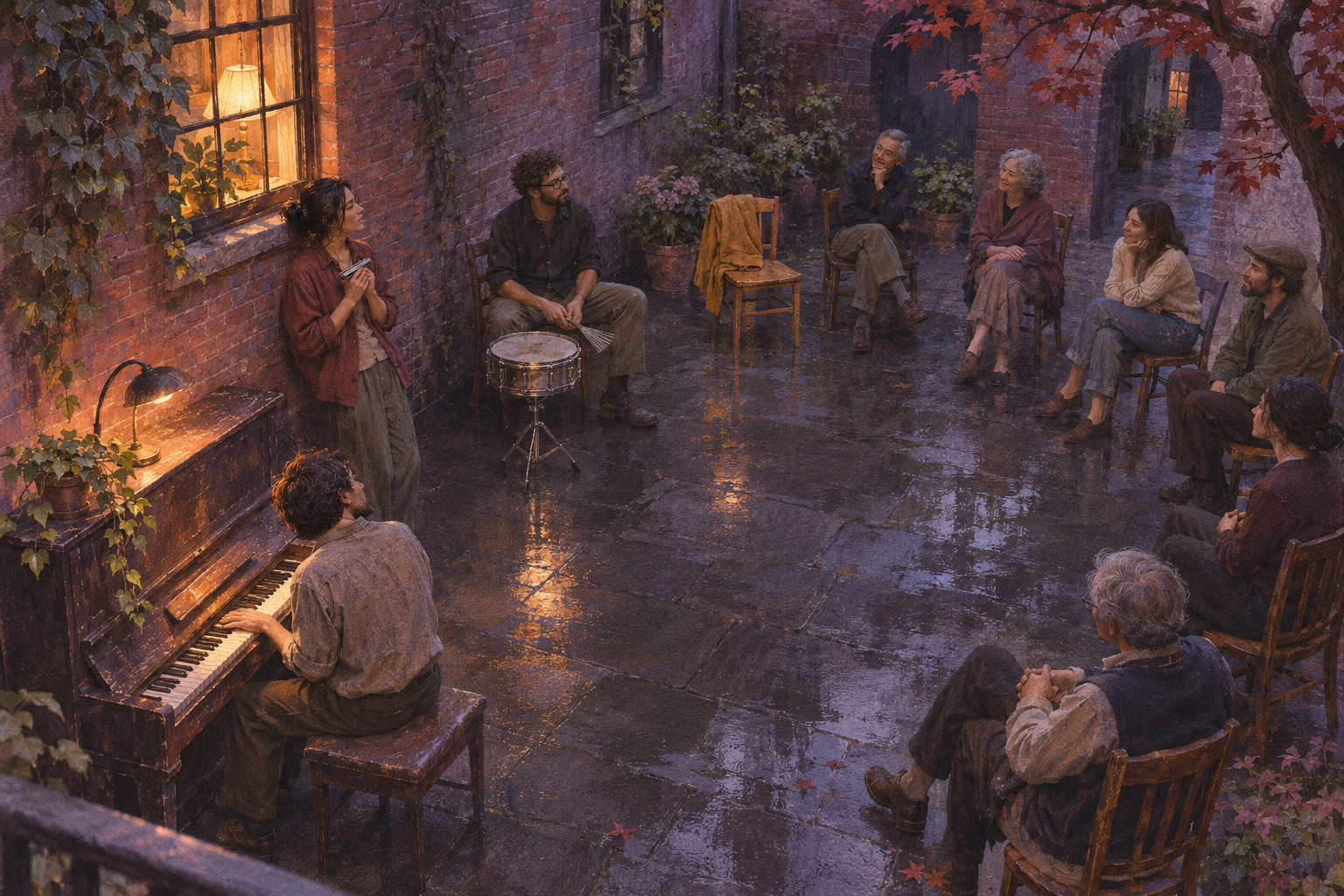
Keep the piano near the ground,
its lower notes a row of dark coats
waiting quietly along a wall.
A harmonica could answer
with a thin, worn seam of air.
A pause could hold
the distance between two answers,
with neither one required to win.
Give the voice a roughened edge,
a phrase that leans behind the beat,
then settles,
without climbing toward a triumph
the story never asked for.
No sudden sun.
No grand arrival.
Only the room you have described:
a little audience,
the city held outside,
a sound that might stay close enough
for each imperfect syllable
to have its weight.
This is the direction,
still waiting to become
a recording we can judge.
The newest span gives it
three and a half to six minutes
to find its unhurried shape.
Keep the full instruction near the brief.
A shorter description chooses;
the earlier words must remain
where the choices can be traced.
The journal can hold an intention
beside the sound that follows,
without mistaking one
for proof of the other.
And if the last note stays low,
let it stay.
A small echo may linger
without opening the curtains,
without explaining
what the quiet means.
No comments yet. Start the conversation.